Opens in a new tab

A Teacher Training School, Rebuilt Around Its Own Structure

Thirteen Trainings, One System

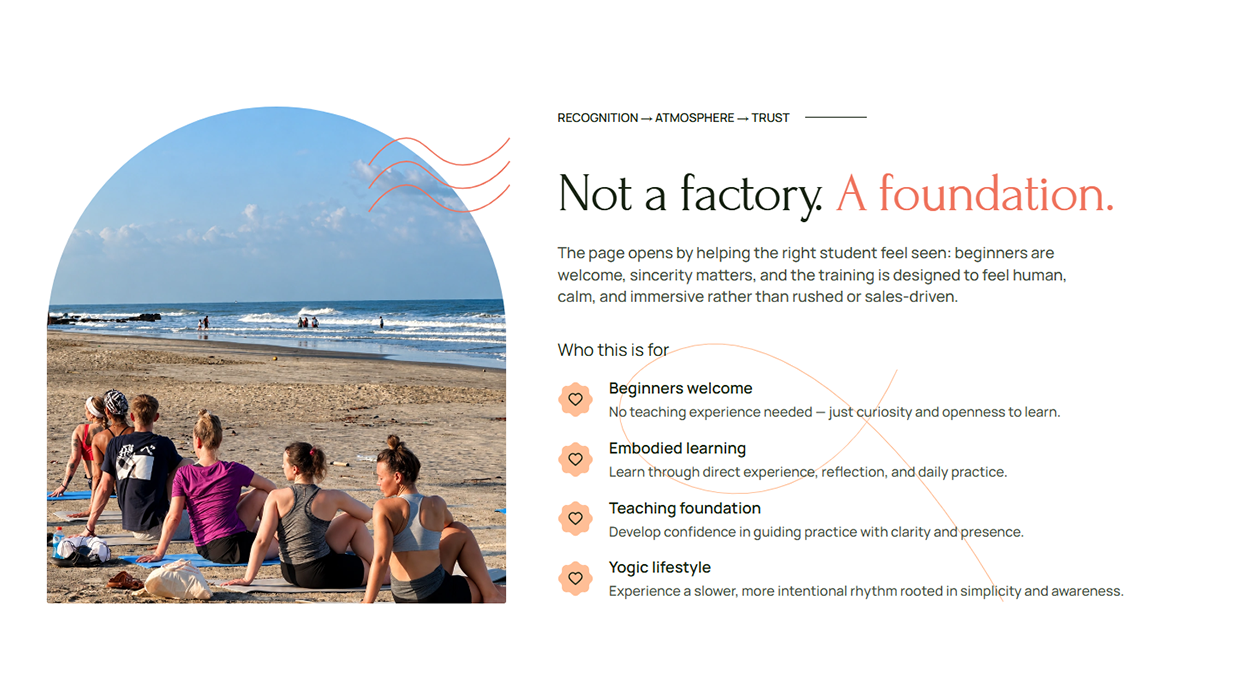
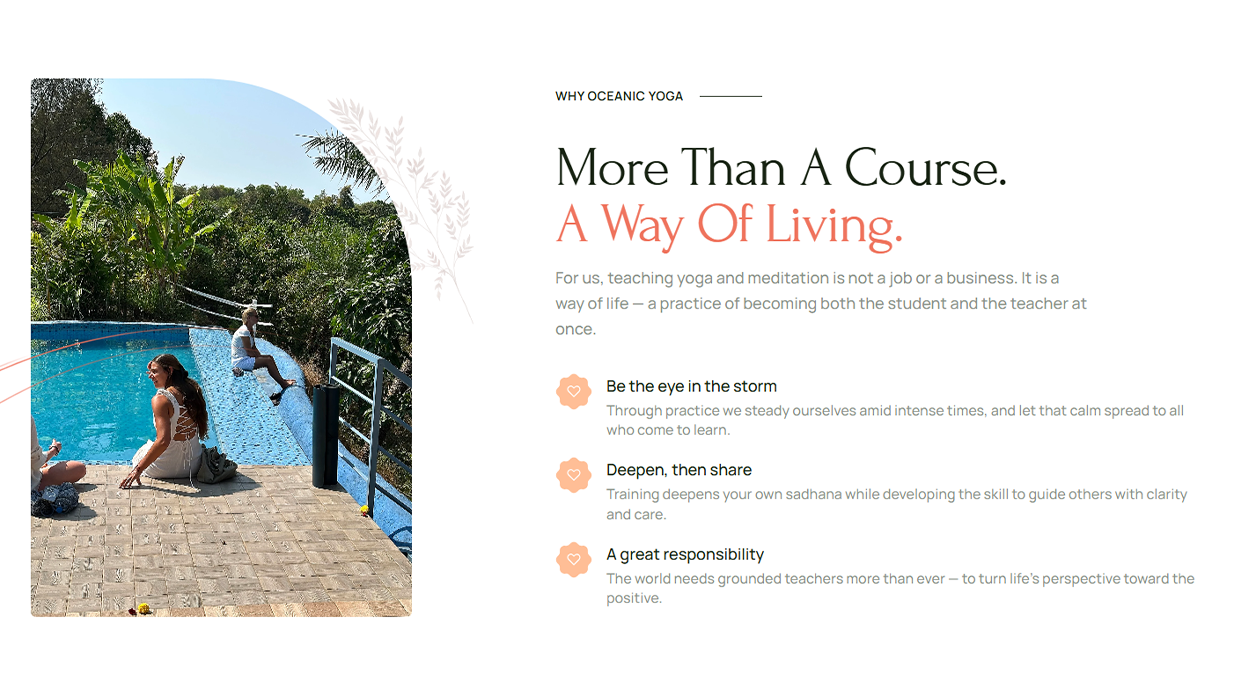
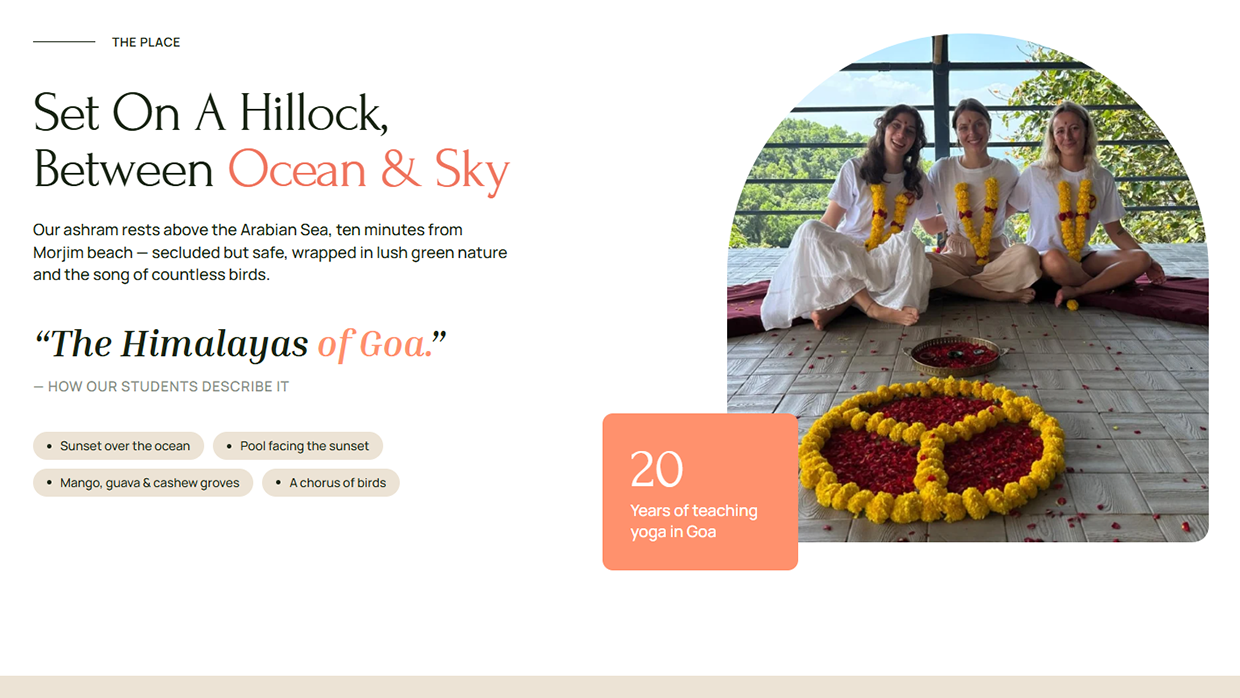
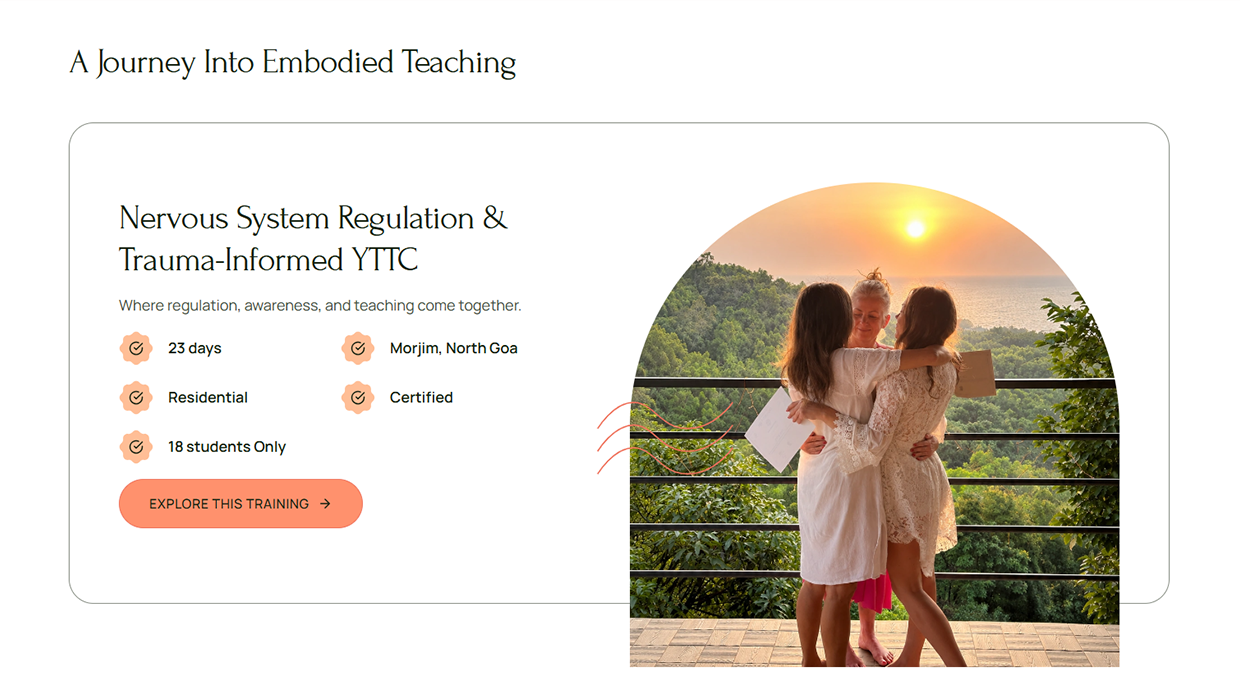
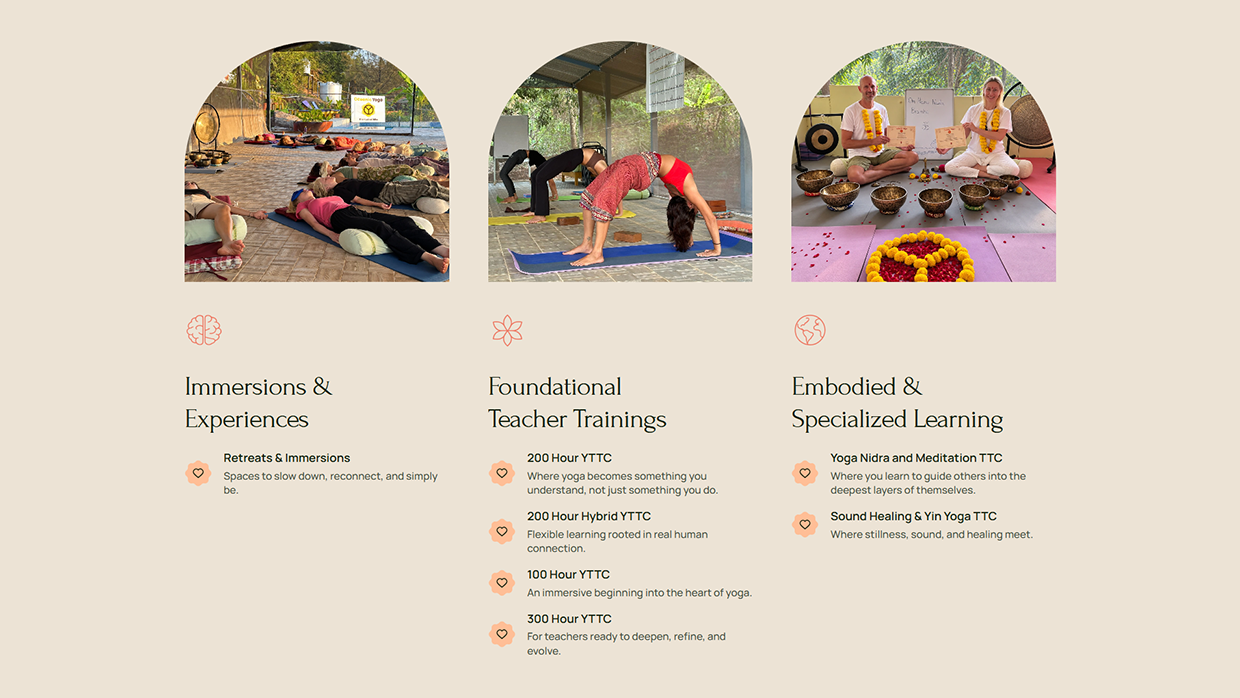
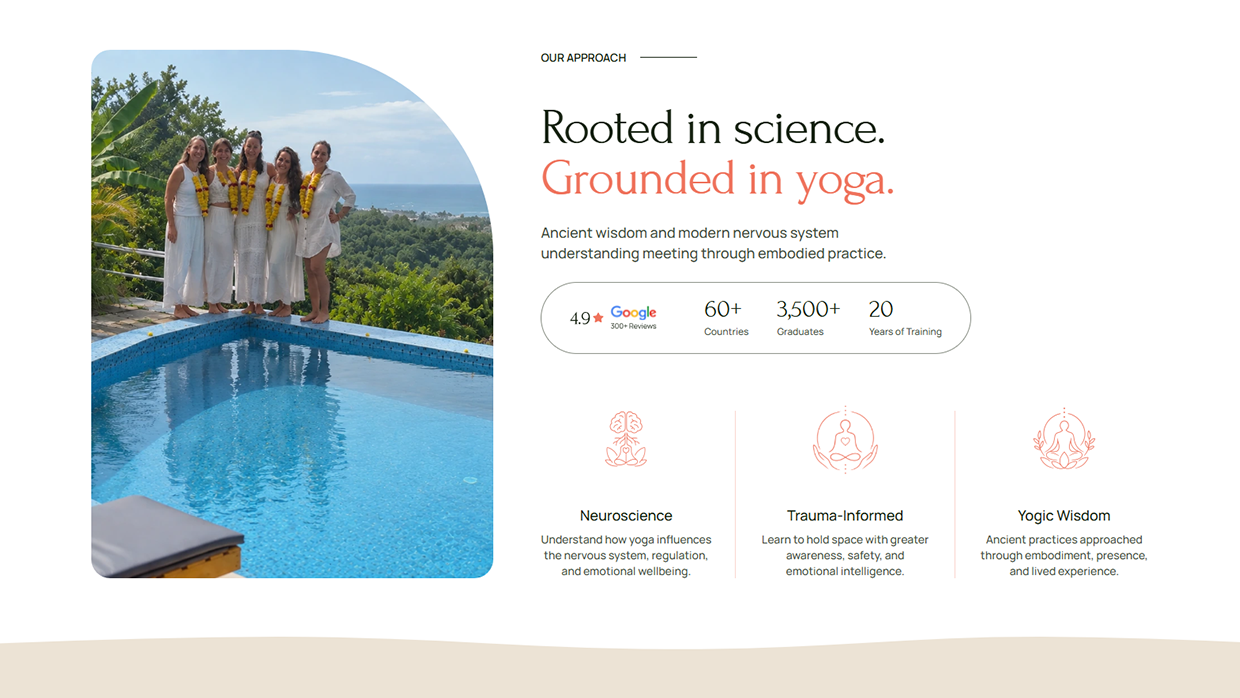
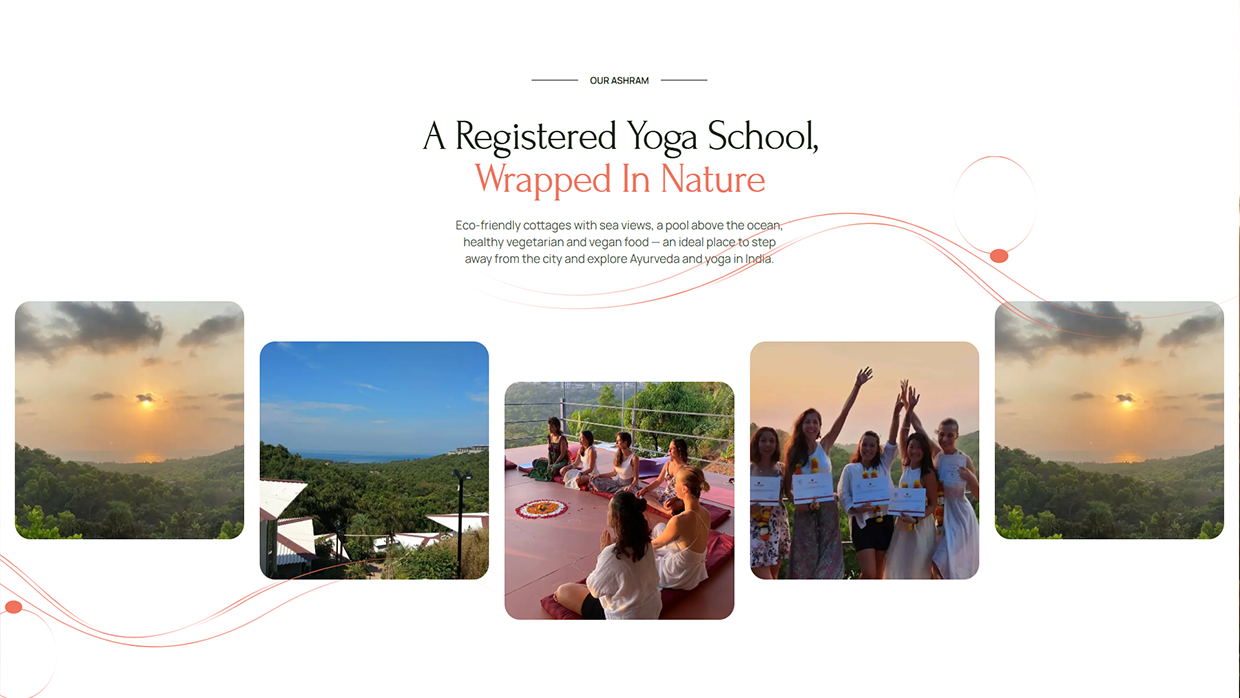
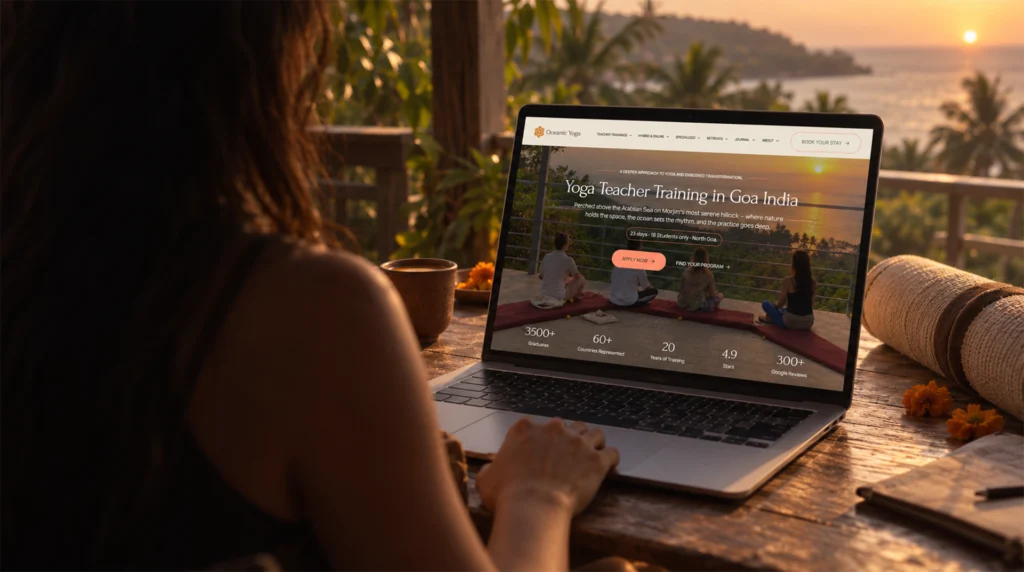
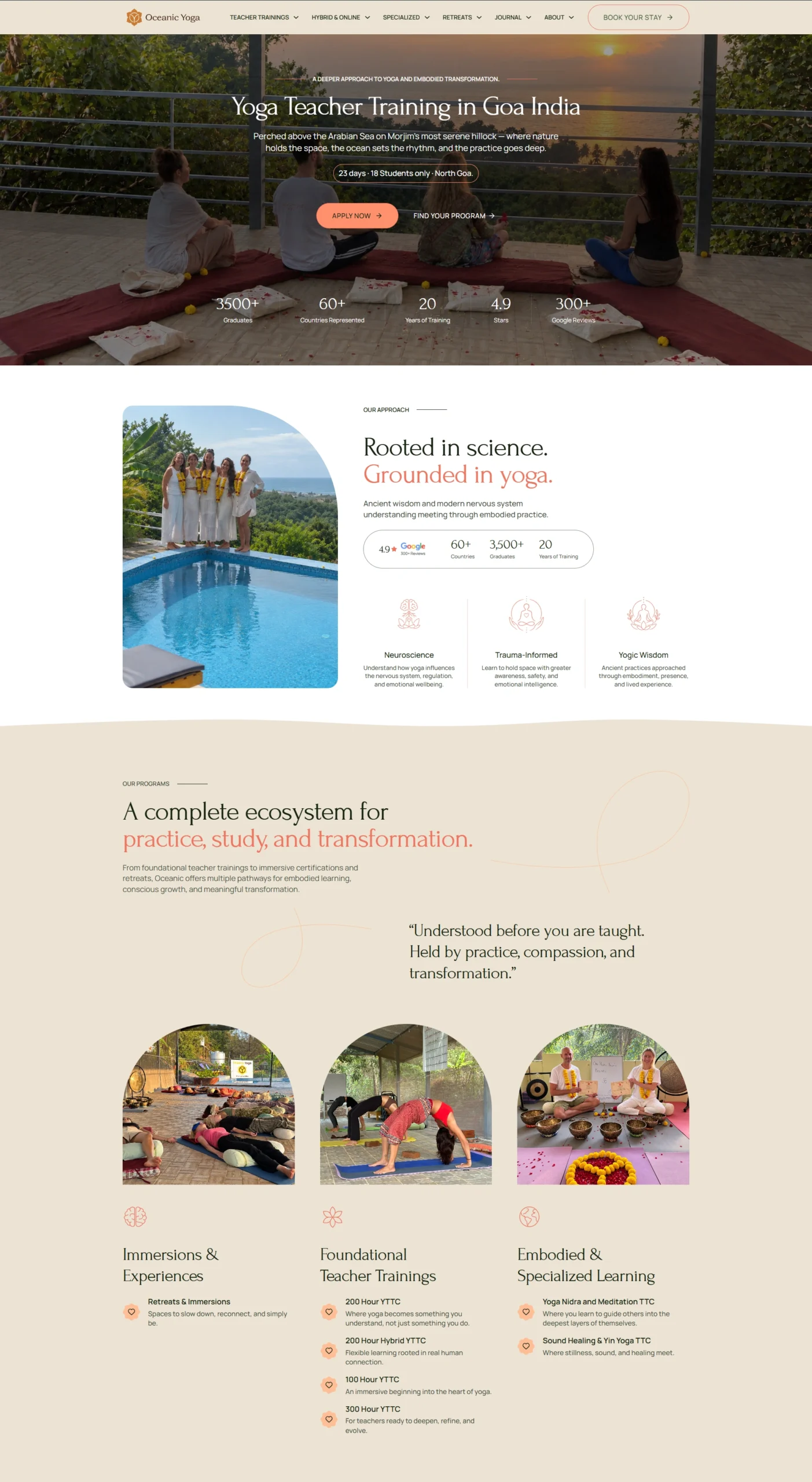
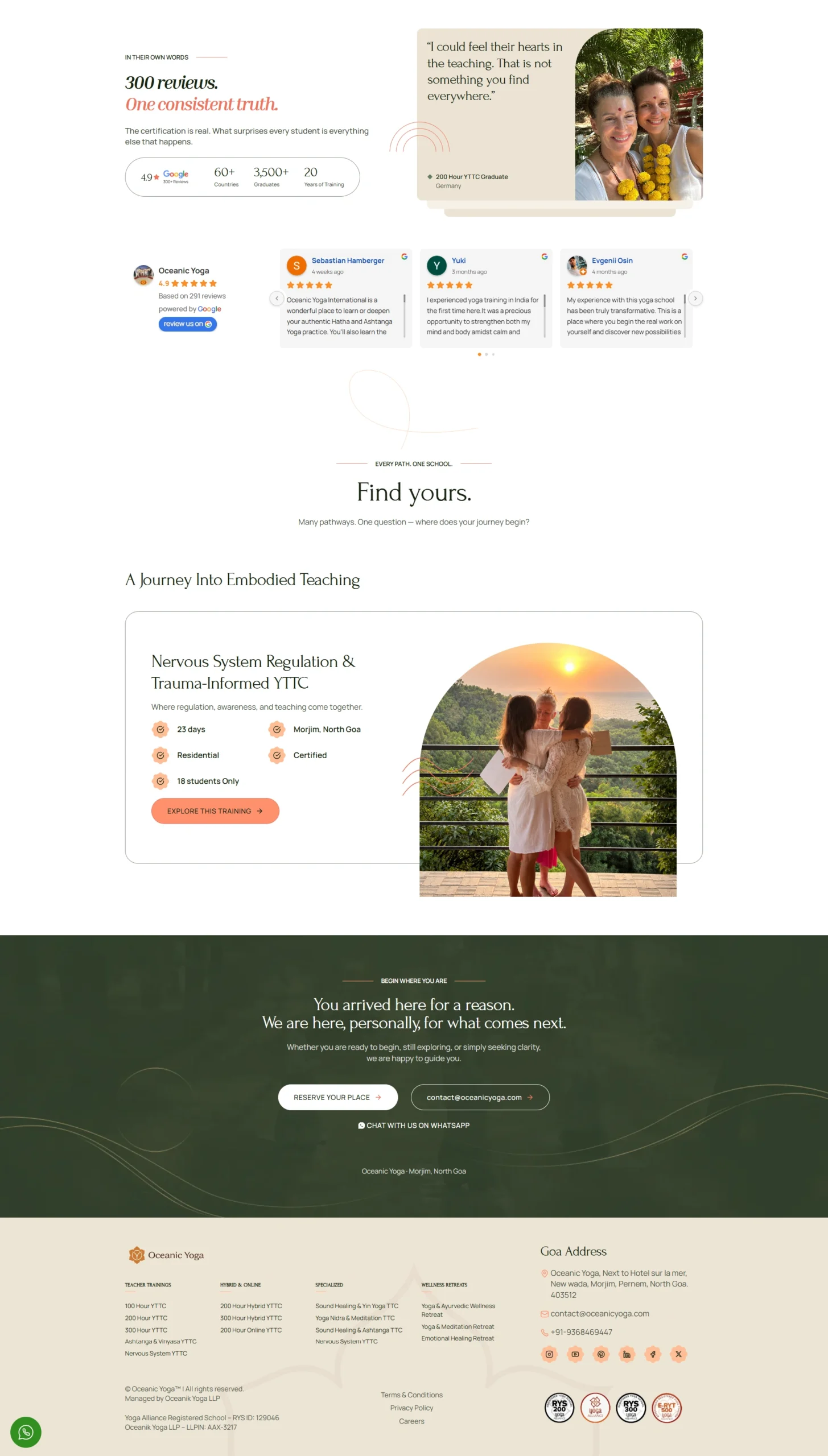
Oceanic Yoga is a residential yoga school on a hillock above Morjim Beach in North Goa, running Yoga Alliance teacher trainings and retreats for students who fly in from around the world. Its old site could not do the one job that mattered, which was to explain thirteen different trainings clearly enough that someone on another continent would commit to a three week residential course. We rebuilt it from Figma into WordPress on Bricks as a component library rather than a set of hand built pages, with a custom application flow in place of a contact form and a course system the team updates itself. Course pages dropped from 6.91 MB to 0.215 MB along the way.

Results at a Glance

Heavy Pages, Made Light

The numbers below come from the finished build, recorded with every course, the full journal and all thirteen trainings in place.
97%

Lighter course pages, 6.91 MB down to 0.215 MB

70

Reusable components behind every page

13

Trainings live, each with its own dates and pricing

141

Articles migrated, filterable and searchable

What Needed Solving

A Complicated School on a Simple Site

A single course can run two pathways at once, each with its own dates, prices and rooms. Multiply that by thirteen and the old site became a place where students got lost rather than enrolled.

Structured content typed as prose

Batch dates, prices, accommodation tiers and FAQs were typed into page layouts by hand. Nothing could be reused, and nothing could be updated without risking the design.

Enquiry meant a bare contact form

Someone choosing between a 200 hour hybrid and a 300 hour residential had to describe it in a free text box, then wait on an email thread to settle cohort and room.

Pages carrying hidden weight

Decorative icons had been saved as raster images wrapped inside SVG files, and the theme inlined every one of them on every single render.

Built to be understood, not admired

What We Delivered

A Component Library, Not a Pile of Pages

Seventy reusable components

Twenty four infobox patterns, eighteen course sections, fourteen global elements and dedicated sets for the application flow and the journal.

Fifteen Bricks templates

Header and footer, six mega menu panels, four single post templates, a blog archive, a popup and a custom 404, all built once and shared.

A course system the team runs

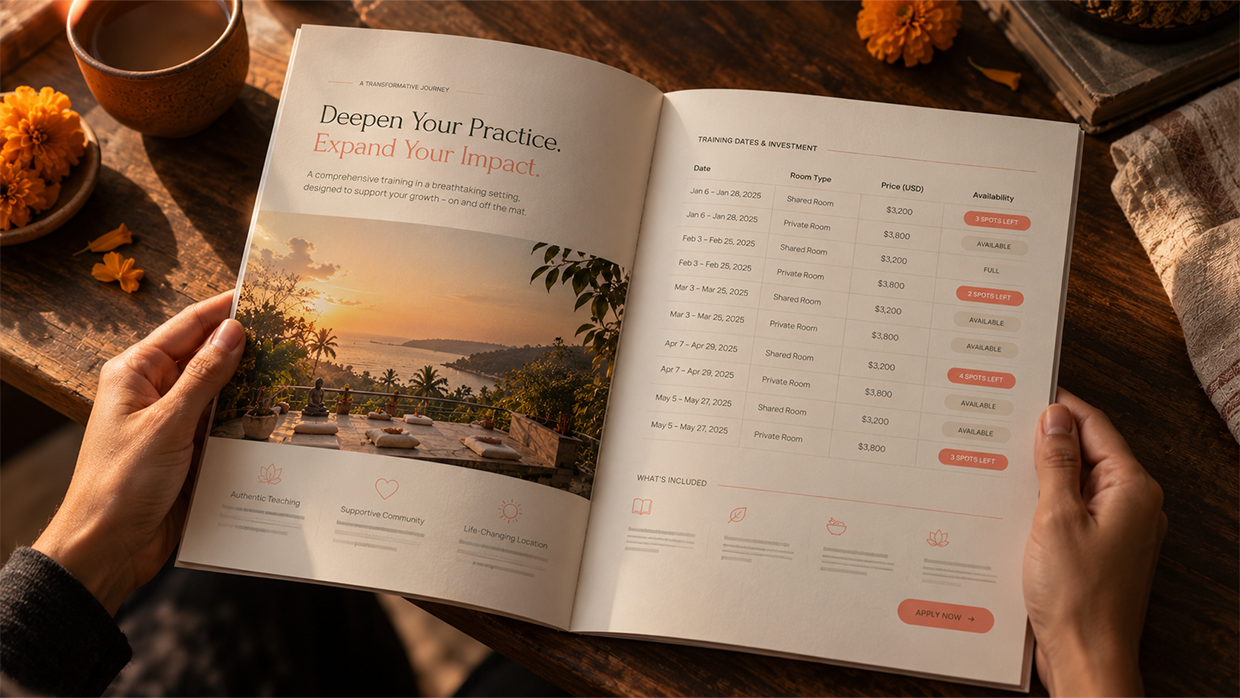
Courses are a custom post type with root level URLs. Cohort dates, prices per room type and places remaining are entered as repeating tables.

Thirteen trainings, all live

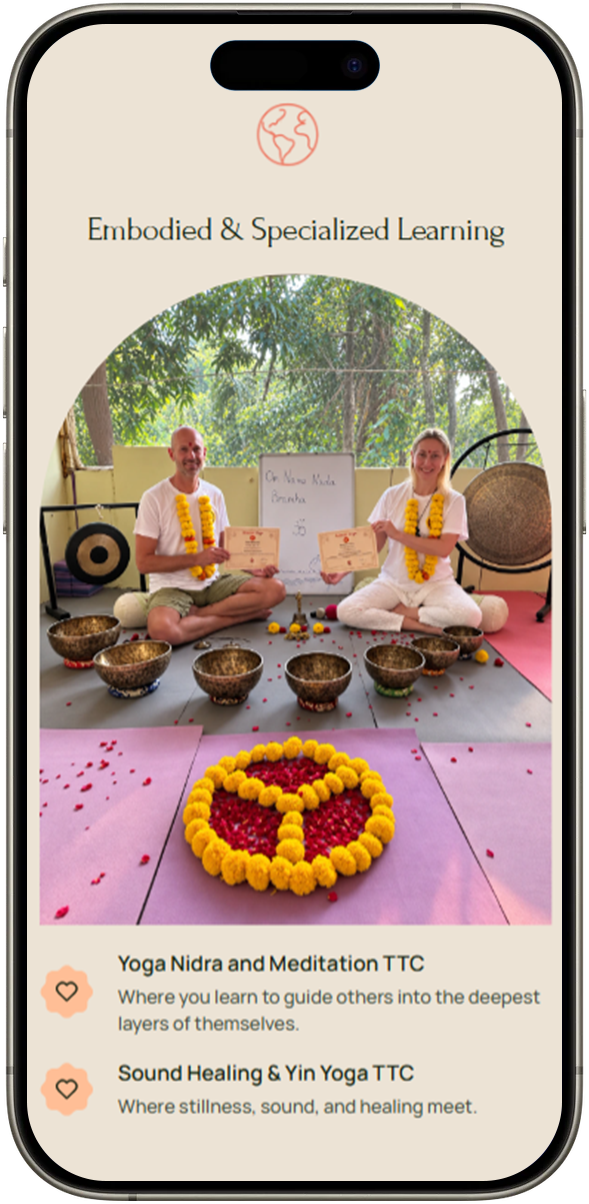
From the 100 hour foundation through 200 and 300 hour certifications, hybrid and online formats, and programmes in trauma informed teaching and yoga nidra.

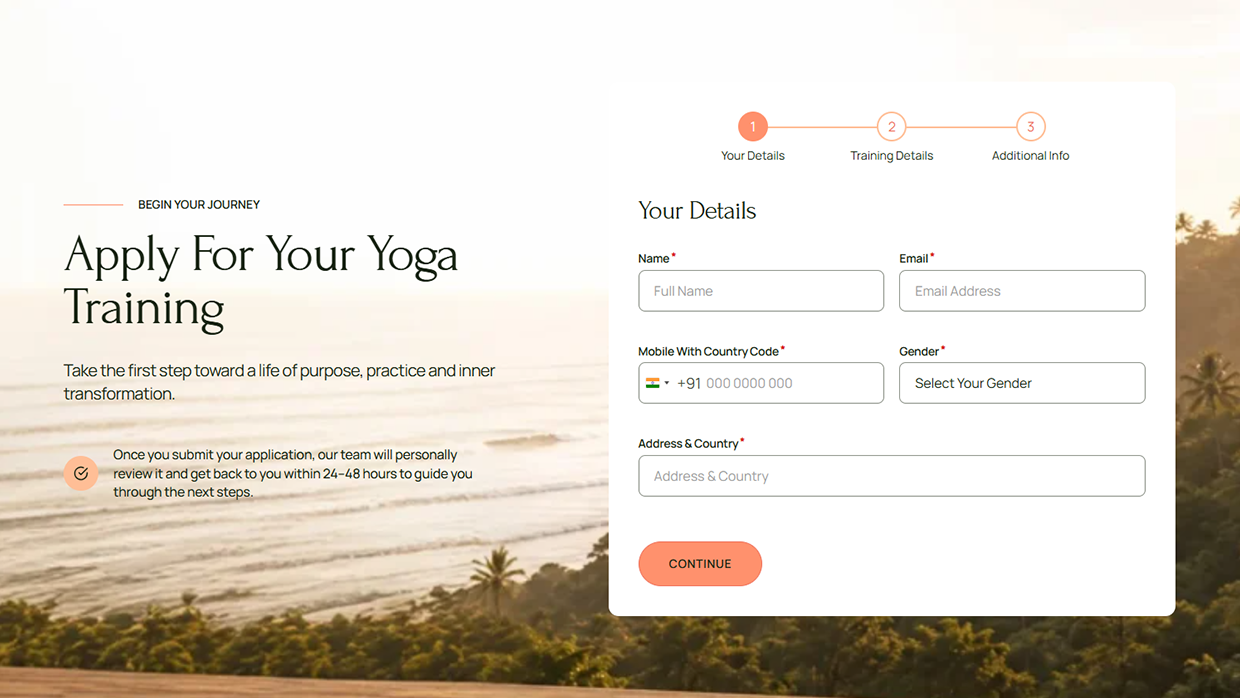
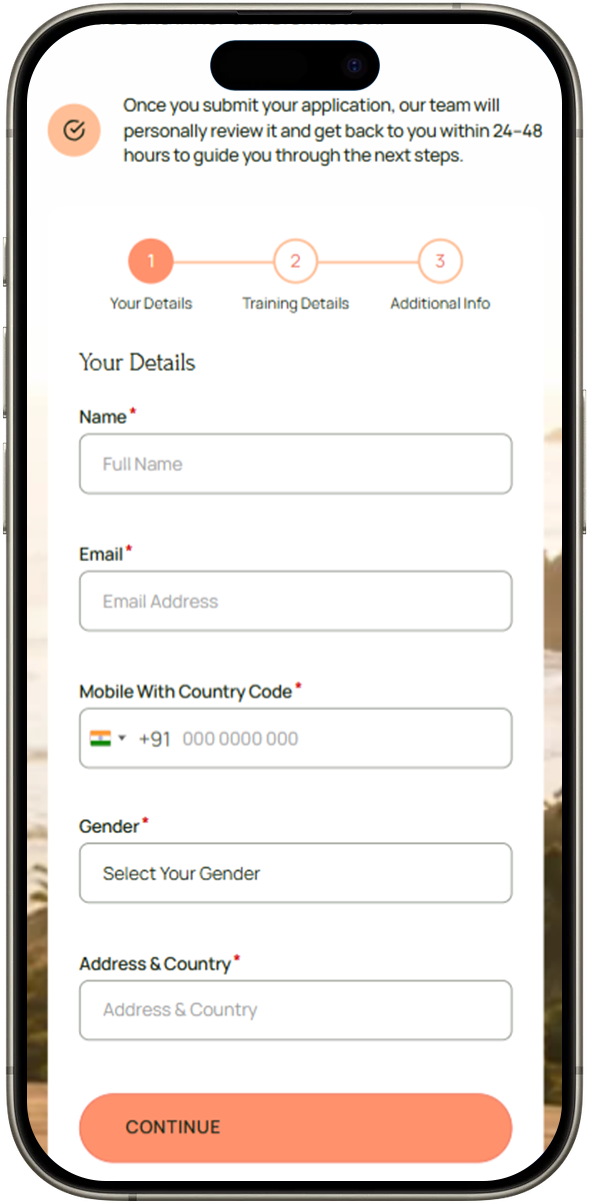
A three step application form

Personal details, then training details, then anything else. Choosing a course filters the dates and rooms to that course alone with no page reload.

Two pathways, one date field

Where a course runs two cohorts at once, dates group under headings naming each one, so nobody books a three week training thinking it is eleven days.

A journal that can be filtered

One hundred and forty one articles migrated, with live category, search and sort filtering. Filter state lives in the URL, so any view can be shared.

Icons traced back to vectors

Fifteen uses of six bitmap SVGs put 4.4 MB of base64 into a single page. We rebuilt the artwork as true vectors and re-pointed every reference.

Performance and SEO

The Weight Was Never in the Design

The heaviest problem was invisible on screen. Several icons were bitmaps wrapped in SVG, and Bricks inlines SVG on every render, so fifteen uses of six files put 4.4 MB of base64 into one page. We traced the artwork back to true vectors and re-pointed every reference. Course pages went from 6.91 MB to 0.215 MB, and three other pages fell from 2,571, 1,779 and 1,753 KB to 356, 345 and 319 KB. Alongside that sit per page metadata and automatic redirects on slug changes, a motion system that respects reduced motion preferences, smooth scrolling served from the site rather than a CDN, and internal links stored as WordPress references so the domain switch at launch needed no find and replace.
The Outcome

A School That Updates Itself

Course pages 97 percent lighter

Thirteen trainings on one system

Applications arrive structured

A journal students can filter

New cohorts without a developer

Metadata and redirects handled
Conclusion

Structure Doing the Selling

Oceanic Yoga now runs on a site shaped like the school itself. Thirteen trainings sit on one course system, each carrying its own cohort dates, room pricing, FAQs and testimonials. Adding a second pathway to a course produces a second labelled date rail on the page and a second grouped option set in the application form, with no developer involved. Students apply in three steps instead of describing what they want in a blank box, and the team reads each application already sorted. The pages that used to weigh almost seven megabytes now load in a fraction of that, and nothing about the design had to be given up to get there.
About the Client

Oceanic Yoga

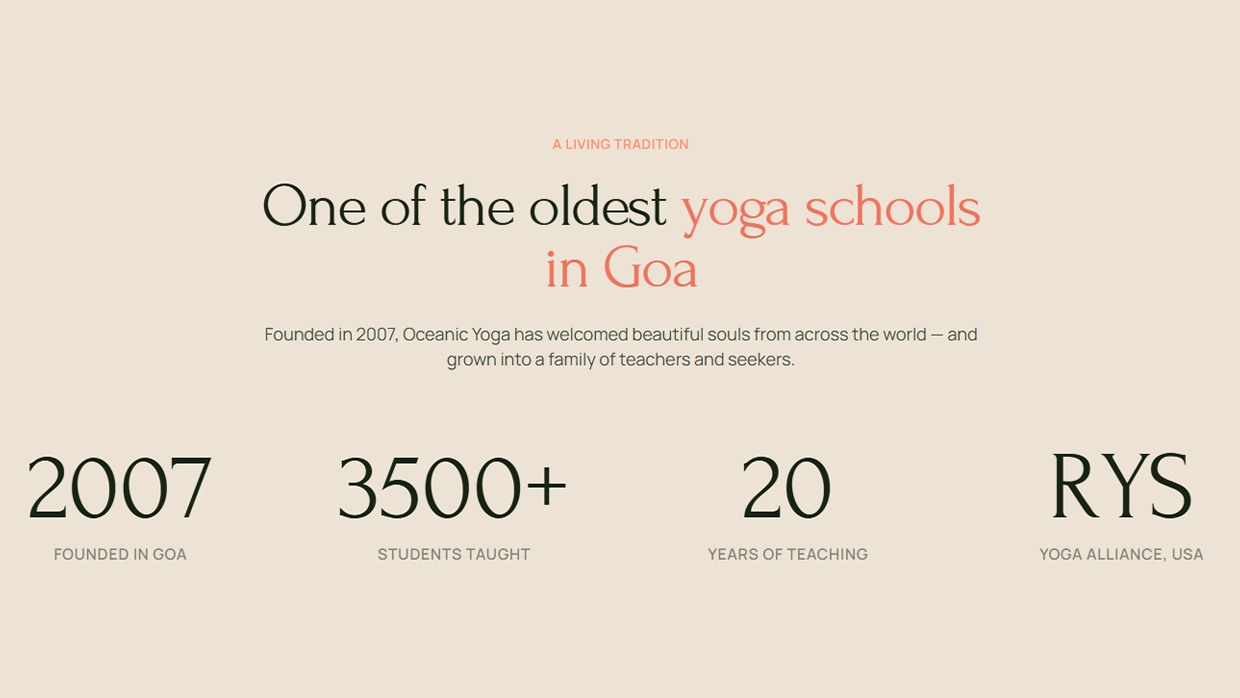
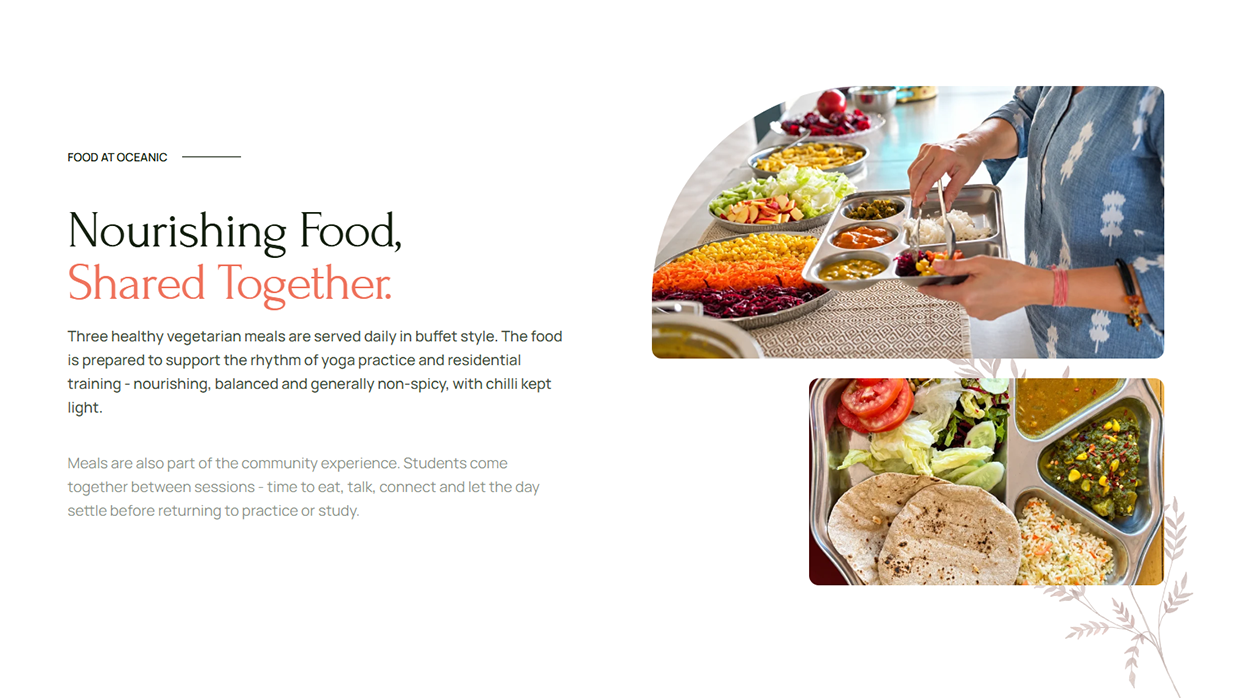
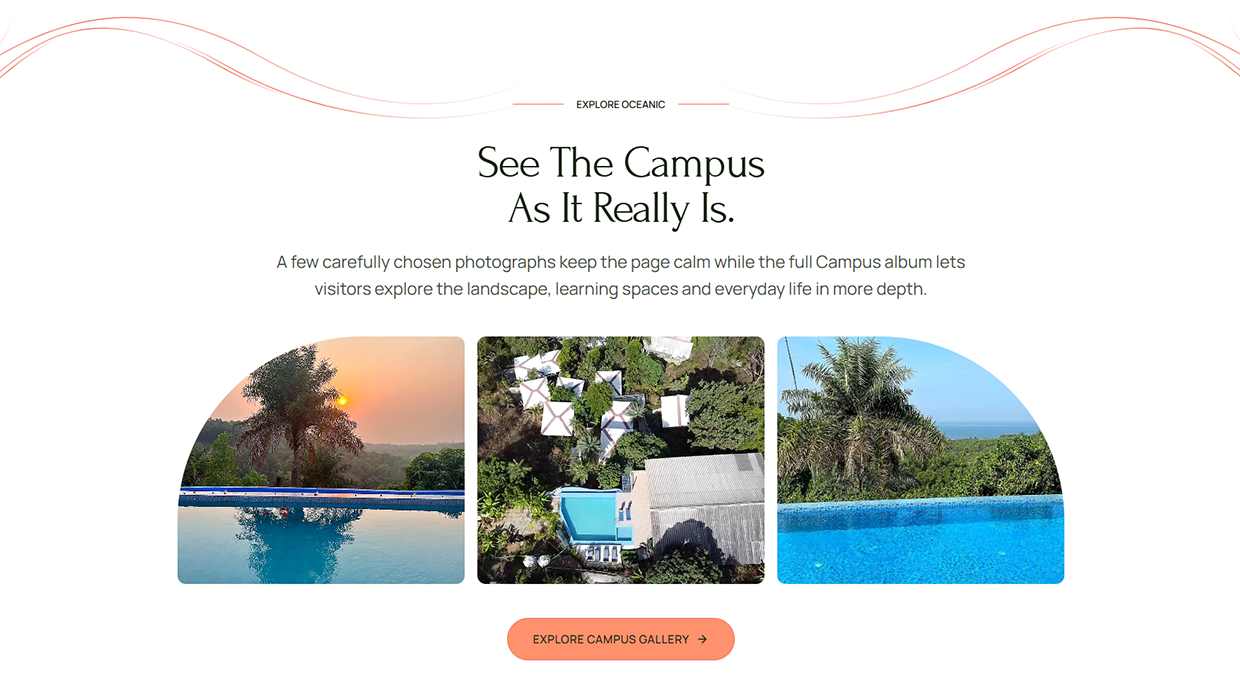
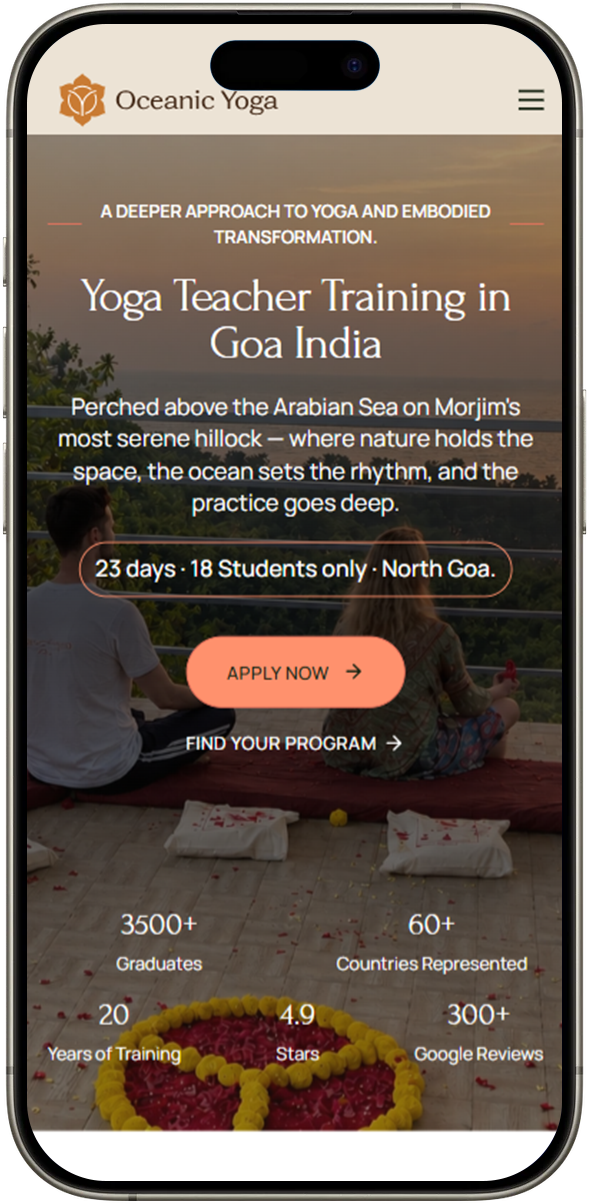
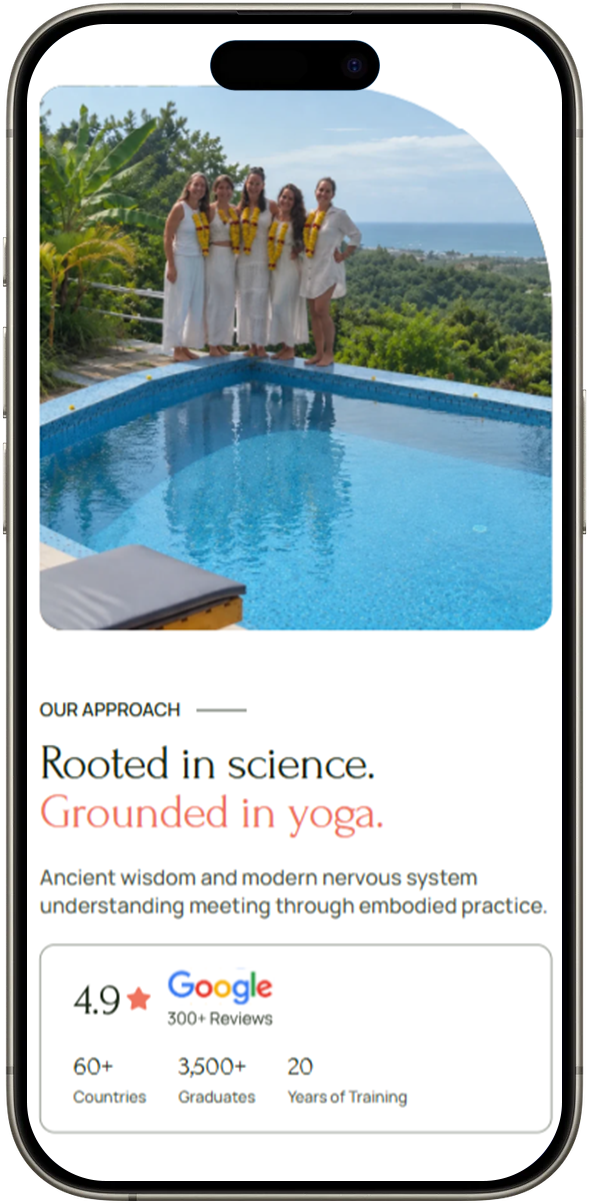
Oceanic Yoga is a residential yoga school set on a hillock above Morjim Beach in North Goa. It runs Yoga Alliance registered teacher trainings and retreats for students who travel in from around the world, from a 100 hour foundation through 200 and 300 hour certifications, alongside specialised programmes in trauma informed teaching, yoga nidra, sound healing and Ayurvedic wellness. Students live on campus for the length of the training, which is why the website has to answer questions about dates, rooms and food as clearly as it answers questions about the syllabus.
Ready to Build Something Great?

Start a Project

More Work

More Things We Made Move

SAAS, Beauty & Wellness

Naeem

Naeem is a cloud platform that salons, barbershops and spas across Saudi Arabia use to run...
Healthcare, Yoga Wellness, Education

Oceanic Yoga

Oceanic Yoga is a residential yoga school on a hillock above Morjim Beach in North Goa,...
Food & Beverage

Yes Gees

Yes Gees has been crafting authentic Indian foods in Australia since 2005, from dosa idli batter...